
Rust, Not Age: What Really and Quickly Steals Your Strength
You’re not too old. You’re too still.

“How did we get here?”
That’s the question that haunted me on December 25, 2022, at 7 p.m., staring at my phone screen thousands of miles from home.
My sister’s name lit up the display. Her voice was shaking.
“Dad’s in the hospital. They’re saying stroke. It’s bad.”
I was in a different country, holding a phone that suddenly felt like it weighed a hundred pounds.
“Can you video call?” I asked, my voice barely steady.
The screen flickered. Then I saw him.
Through my sister’s phone screen, past her trembling hand, there he was—my father. The man who’d carried me on his shoulders as a child was now motionless in a sterile ICU bed.
His left side was completely paralyzed. Machines beeped rhythmically around him, counting breaths he couldn’t take on his own.
I wanted to fly.
I wanted to smash through the distance, through borders and oceans, and be there. Hold his hand. Tell him everything would be okay.
But I couldn’t move. I was frozen, powerless, watching my father fight for his life through a screen.
The only thing I could do. The only thing that reached across those thousands of miles was prayer.
And in that moment of helplessness, something cracked open inside me. Not just grief, but a deeper question I couldn’t escape:
“How did a strong man who worked for over 40 years end up here?”
Three years earlier, everything had been different. He’d retired after a 43-year career; the same company, the same relentless 7-to-3 routine, five days a week, decade after decade. He’d given everything to that job. When retirement finally came, he was bone-tired. Depleted. Done.
He’d earned his rest.
So he rested.
He slept longer. Stopped driving. Ate well, played with grandchildren, and enjoyed evening beers.
From the outside, it looked like the retirement dream. But something was happening beneath the surface, something none of us saw coming.
His muscles were disappearing.
Not because of age.
The hidden truth about “getting older”
Here’s what I didn’t know then, what nobody told my father, and what most people still don’t realize:
Muscle loss isn’t about the years you’ve lived. It’s about the movement you’ve stopped doing.
Around my late 30s, I started noticing it in my own body. Groceries felt heavier. Stairs became daunting. There was a growing disconnect between the athletic person I used to be and the body I was now inhabiting.
I told myself it was just aging. The inevitable decline. The price of getting older.
I was wrong.
It is what doctors call sarcopenia—age-related muscle loss.
But here’s the truth they don’t always tell you:
Sarcopenia isn’t caused by age. It’s caused by inactivity.
Think of your muscles like a subscription service.
Your body is constantly asking: “Are you still using this?” If the answer is no, the subscription is cancelled. No refunds. No grace period.
The truth is this: healthy adults lose about 1% of muscle mass yearly after 60, but that’s not because of birthdays. It’s because of inactivity.
When you stop challenging your muscles, they don’t just weaken; they vanish. And it happens faster than you think.
Research shows that just a few days or weeks of less movement can lead to quick muscle loss. This is especially true for older adults.
Your body is highly efficient: use it or lose it, isn’t a motivational poster, but it’s biology.
My father had given his body permission to rest. His body responded by shutting down what it no longer needed.
The deeper lesson: Rust vs. Neglect
Think about an old bicycle left in a garage.
Does it stop working because time has passed? Or because nobody rode it?
Muscles are the same. They don’t rust with age; they rust with neglect.
I learned this the hard way. I watched my father struggle for months in rehab. He had to relearn how to stand, walk, and dress himself. Every painful therapy session was his attempt to rebuild what three years of stillness had taken away.
But as my father began his recovery, something unexpected happened when I met someone who shattered everything I believed about aging and strength.
The 80-year-old who proved me wrong
She’s my friend’s mother. She turned 80 this year.
I remember the day I visited her small home, warm with the smell of fresh bread. She moved around the kitchen with ease, setting down a cup of tea in front of me, her hands steady and strong.
We talked about life, family, and the years that had passed.
Then I leaned forward and asked the question that had been burning in my mind: “What’s your secret? How are you still so strong?”
She threw her head back and laughed, a full, genuine laugh that filled the room. “The grace of God,” she said, waving her hand as if dismissing the question entirely.
But I didn’t dismiss it.
I watched her closely after that day, studied the rhythm of her life, and I saw something else. Something she didn’t even recognize as extraordinary because to her, it was simply living.
Each morning, she grabs her gardening tools, walks 500 meters to her plot, tends and harvests vegetables, then sells the produce. In the afternoon, she goes to the market to sell second-hand toys.
No car—just her legs, routine, and purpose. She walks daily, not for exercise but for life.
And at 80, she’s stronger than my father was in his late 60s.
Both believed they were living normally, but with completely different strengths.
The difference? She stayed active.
Here’s what her life taught me:
Purpose keeps you moving, and movement keeps you alive.
She doesn’t go to a gym or follow a workout plan. She has reasons to move. Her vegetables need watering, and her customers depend on her showing up. Her strength isn’t maintained through exercise; it’s preserved because her life gives her compelling reasons to stay active.
Strength isn’t built in gyms; it’s built in daily repetition.
Five hundred meters every morning. Carrying tools, bending to weed, lifting produce. These aren’t dramatic workouts; they’re small movements repeated day after day, year after year, compounding into resilience that lasts decades.
Independence is earned through use, not granted by luck.
At 80, she needs no one to drive her or help her stand because she never stopped practicing those movements. Every walk was a deposit into her future freedom. The assistance you avoid needing in your 80s is the movement you do in your 40s, 50s, 60s, and 70s.
The body doesn’t count birthdays; it counts demands.
Her muscles don’t know she’s 80. They only respond to what she asks of them. Daily work signals “stay strong,” so they do. My father’s muscles received a different message: rest. His body interpreted rest as “strength no longer needed” and let it go.
Movement is medicine, but only if you take it daily.
You can’t store fitness like money in a bank. Muscle is living tissue that responds to today’s demand, not yesterday’s workout. Miss a week, and your body adapts to stillness. Miss a month, strength slips away. Your muscles have a short memory. They need constant reminders that you still need them.
This woman isn’t special. She’s not genetically gifted or exceptionally lucky. She simply never stopped living in her body.
And that made all the difference.
When I stopped blaming my age
In my 40s, I started avoiding activities I once loved; not because I didn’t want to do them, but because my body felt like it was betraying me.
I told myself the same lie everyone tells themselves: “This is just what happens when you get older.”
That’s when I spoke to a physical therapist. She looked at me and said something that shattered the story I’d been telling myself:
“Muscle loss isn’t your age; it’s your inactivity.”
That sentence hit me like cold water. I’d been blaming time for something that was actually a choice.
Here’s the shift that changed everything: I stopped asking “How do I accept getting weaker?” and started asking “What if I’ve been wrong about what’s happening to my body?”
Because here’s the hidden angle nobody talks about: your muscles don’t decline on a set schedule. They decline when you don’t use them.
What if you stopped using your voice for three years? Would you blame your age for any trouble you had speaking? If you stopped reading for a decade, would you call it inevitable when words became harder to process?
Of course not. You’d recognize it as atrophy from inactivity.
But with muscles, the story we’ve been sold is backwards. We’re told weakness comes with age, that decline is scheduled on the calendar, that frailty is life’s bill for getting older.
It’s not.
Your body is responding exactly as it should to the signals you’re sending it. If you’ve been showing signs of rest and safety, your body has been letting go of what it thinks you don’t need anymore.
The revelation isn’t that you’re getting older. It’s that you’ve been teaching your body that you don’t need strength anymore.
And your body is an excellent student.
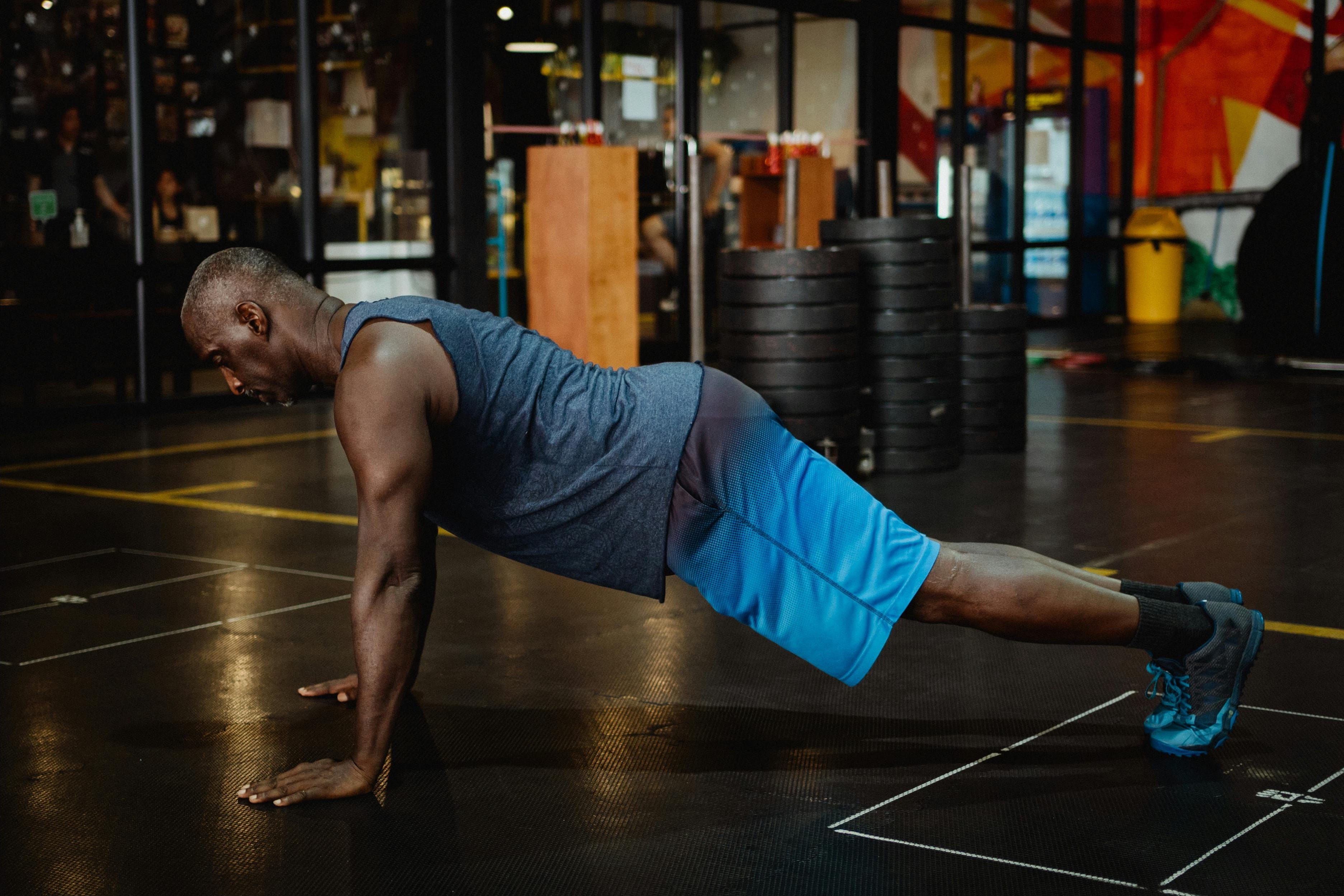
So I experimented. I started with 10 minutes of simple strength exercises daily. Bodyweight moves: squats, push-ups, planks.
Nothing fancy. No gym membership. Just me and gravity.
Within a week, I felt stronger. By a month, groceries were lighter, stairs were easier, and something psychological shifted.
I wasn’t just moving my body; I was reclaiming it.
What science actually says (and doesn’t)
Here’s what the research confirms:
Muscle loss with age is not inevitable; It’s preventable and reversible.
But here’s what most people don’t know: sarcopenia has two types.
Primary sarcopenia: Aging itself. Rare. Minimal impact.
Secondary sarcopenia: Inactivity. The rust that eats away at your muscles. The silent thief that steals your strength while you’re convinced it’s just time passing.
And this is the one you control. Because it’s driven by behavior.
Most people think they have primary sarcopenia. They don’t. They have secondary sarcopenia disguised as aging.
I’ve watched people in their 70s and 80s who couldn’t stand from a chair unaided regain full independence in under three months through consistent resistance training.
What changed wasn’t their age, but it was the signal they sent their body daily: “I still need this strength.”
Here’s the science beneath the transformation: as we age, our muscles develop anabolic resistance. They become less responsive to the protein-building signals that maintain mass and function.
But resistance training, even just 10 minutes daily, overrides this resistance. You’re not fighting biology; you’re reactivating it.
The body doesn’t count birthdays. It counts demands. Make the demand consistent, and the biology follows. Your body starts rebuilding.
And it’s never too late.
A study found that frail older adults who began strength training improved their muscle mass and function. This was true even for those starting from a very weak state.
The key isn’t intensity. It’s consistency.
Your body doesn’t need you to be perfect. It needs you to be persistent.
Start where you are. Add weight when it feels easy. Progress happens in small, repeated steps.
The real question isn’t “how do I stop aging?”
The real question is: “How do I live in the body I have to its fullest potential?”
Here’s what I’ve learned from my father’s stroke, the 80-year-old gardener, and my 40s reflection:
Age doesn’t steal your strength. Stillness does.
You’re not too old. You’re too still.
And here’s the truth that should shake you awake: your muscles are waiting. Right now.
They’re not gone.
They’re dormant.
They haven’t given up on you.
What happens next is up to you
My father made a full recovery after a long period.
I am grateful he is walking now. He’s even traveling around the world again, reclaiming pieces of the life we thought he’d lost. It’s proof that it’s never too late.
But recovery is hard. Prevention would have been easier.
The 80-year-old grandmother? She’s out there each morning, caring for her garden and walking her path. She lives with a strength that many half her age have lost.
And me? I’m still doing my 10 minutes. Some days it’s more. Some days it’s bodyweight squats while the coffee brews.
Your turn: One small step today
Here’s what I want you to do: Not tomorrow, not next week, but right now, today.
Before you scroll to the next thing. Before you tell yourself you’ll start on Monday.
Do one strength exercise. Just one.
A wall push-up while dinner is cooking.
Ten squats before your shower.
A 30-second plank during a commercial break.
Because here’s the truth: every day you wait is another day your muscles get the message that they are not needed. Every “I’ll start tomorrow” is teaching your body to let go a little more.
My father waited. He thought he had time. Three years felt like nothing until a stroke made those years everything.
You don’t get those days back.
Don’t aim for transformation. Aim for the first brick of your foundation.
Tomorrow, add another brick. Ten minutes becomes a habit, the habit shapes a pattern, and the pattern builds a life where your body doesn’t betray you—it carries you.
The clock is ticking. Not on your age, but on your inactivity.
Challenge this belief: “I’m too old to get stronger.”
Replace it with this truth: “My muscles are use-dependent. I hold the power.”
Because you do.
Your muscles haven’t quit. Have you?
And they’ll respond to whatever you ask of them today.
Start where you are. Move consistently. Age powerfully.
I love this post, story and how you wrote it, Jimmy. I saw it in my mother too, and my strong dear grandmother when the nursing home environment meant she had to curtail all her usual movement. I used to feel so worn out and inept keeping a garden, but it's gotten me stronger over the years. Thank you for sharing a powerful truth.
Great piece, Jimmy. My dad was in excellent health for most of his life. Lived to be ninety-one. When they moved from their 12-acre hobby farm into a small ranch home, he sat more. The scoliosis he'd had from childhood worsened. He became more and more stooped over. His hands started shaking. He had a stroke at eighty-eight (it's possible there were more prior) and then came the sharper decline. No driving. More sitting. Falling. Broken hip. Blah blah blah. His final stroke last November put him into a nursing home, unable to care for himself or even speak. I've worked out for years and plan to remain as active as possible.